

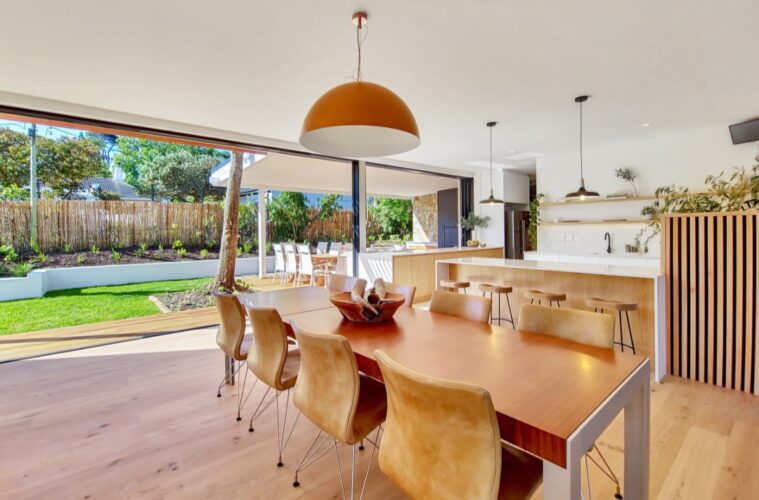
Julia Finnis-Bedford, founder of Amazing Spaces, has spent 25 years pairing international film crews shooting major blockbusters with stunning South African properties through her film locations agency. Now, with her new property development division, Habitat by Amazing Spaces, she’s translating those Hollywood set principles into liveable homes. Her debut project, Sillery Oaks in Constantia, demonstrates how to bring cinematic presence into residential spaces. Here’s how to apply these principles to your own home.
Frame your views like a cinematographer
Think of your windows as cameras capturing scenes. Floor-to-ceiling windows don’t just let in light, they frame garden views like living paintings. At Sillery Oaks, windows frame ancient stinkwoods and fruit trees as deliberate focal points.
If you can’t install new windows, work with what you have by removing heavy curtains or blinds that block sightlines. Keep window areas clear of clutter so the view becomes the focal point. Consider which views deserve attention. Ancient trees, garden features or even interesting architectural elements in neighbouring properties can become part of your interior design when properly framed.
Create theatrical reveals with sliding elements
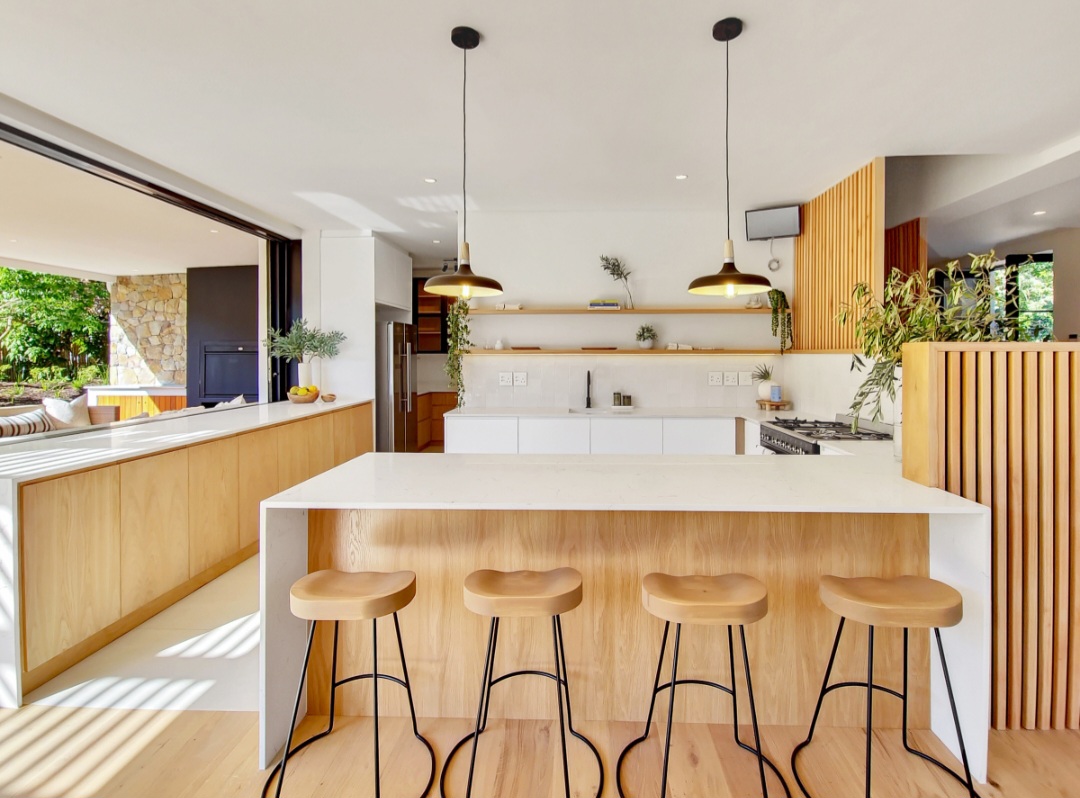
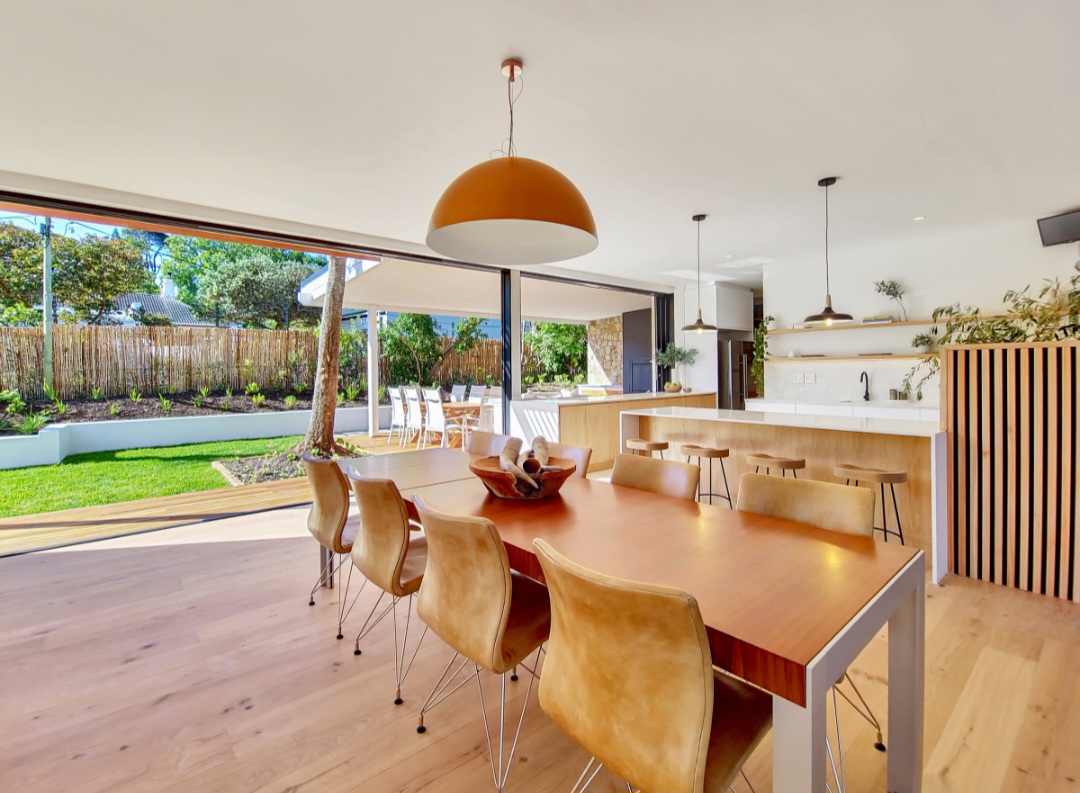
Julia incorporated oversized pocket sliders at Sillery Oaks to transform how you move between spaces. “In the kitchen, even the counter slides away, opening the heart of the home directly onto the patio,” she explains. This approach turns everyday spaces into entertainment stages.
If full wall sliders aren’t feasible, look for opportunities to install barn doors or wide French doors that can fully open. Think about which barriers in your home could become moveable elements instead.
Use darkness strategically
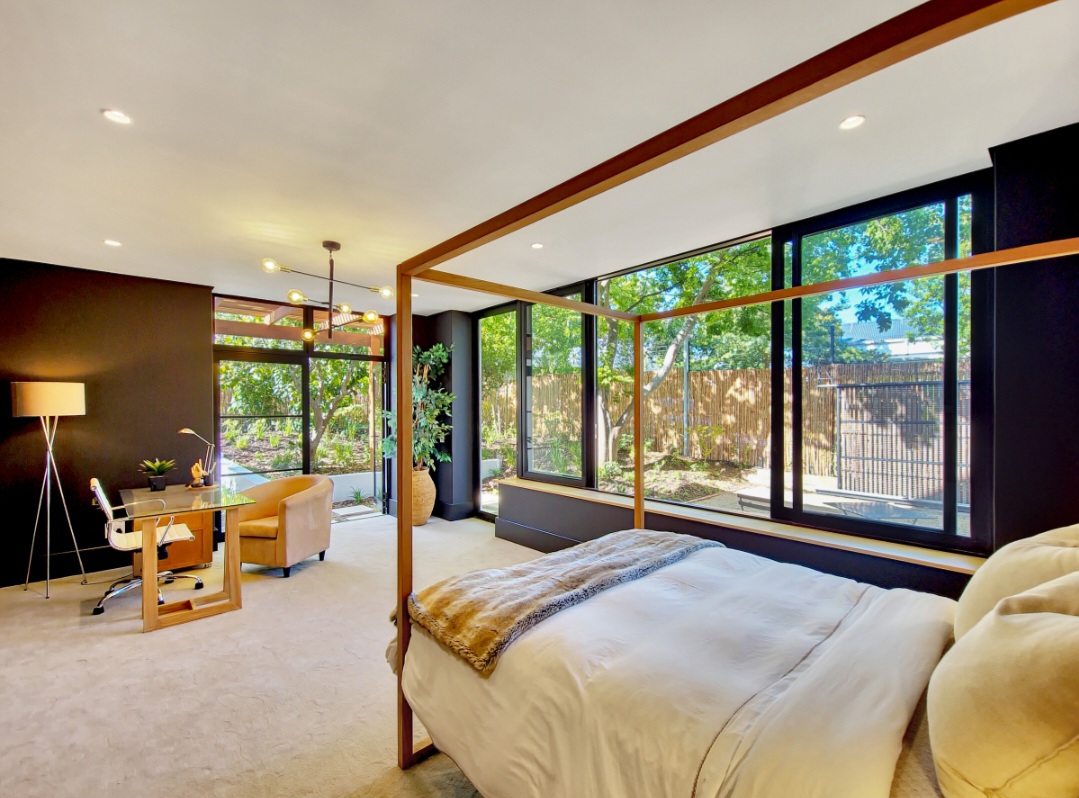
“The downstairs guest bedroom is painted entirely in black, joinery included, creating a cocooned retreat beneath the canopy of trees,” says Finnis-Bedford. “The dark envelope makes the view outside feel more vivid, more alive.”
If painting everything black feels too committed, try one accent wall in a deep, moody colour. Dark colours work particularly well in rooms surrounded by greenery, where the contrast between interior and exterior creates visual drama.
Add sculptural security elements
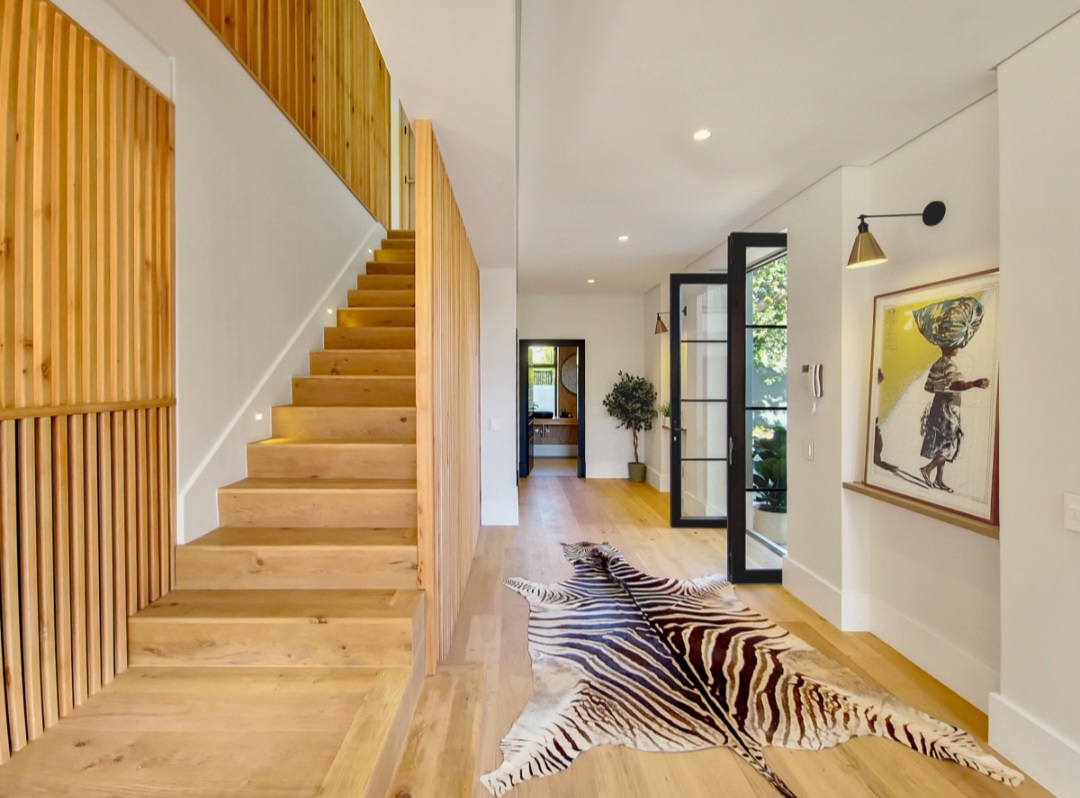
Drawing on her experience staging properties for international film crews, Julia knows that every element should serve dual purposes. “The timber security panels upstairs are sculptural, functional art casting ever-changing shadows, the kind of textural detail that catches a cinematographer’s eye,” she notes.
Look for security solutions that double as design features. Gates and balustrades can add character without severity. Choose materials and finishes that complement your home’s architecture rather than fighting against it.
Create layered sightlines
A central courtyard or internal garden pulls daylight deep into your layout, creating the kind of layered views that add visual complexity. Even a small internal courtyard or light well can transform how a home feels.
If structural changes aren’t possible, create visual depth through strategic mirror placement or by arranging furniture to create sightlines through multiple rooms. The goal is to make spaces feel connected and visually interesting from multiple vantage points.
Marry contemporary and traditional elements
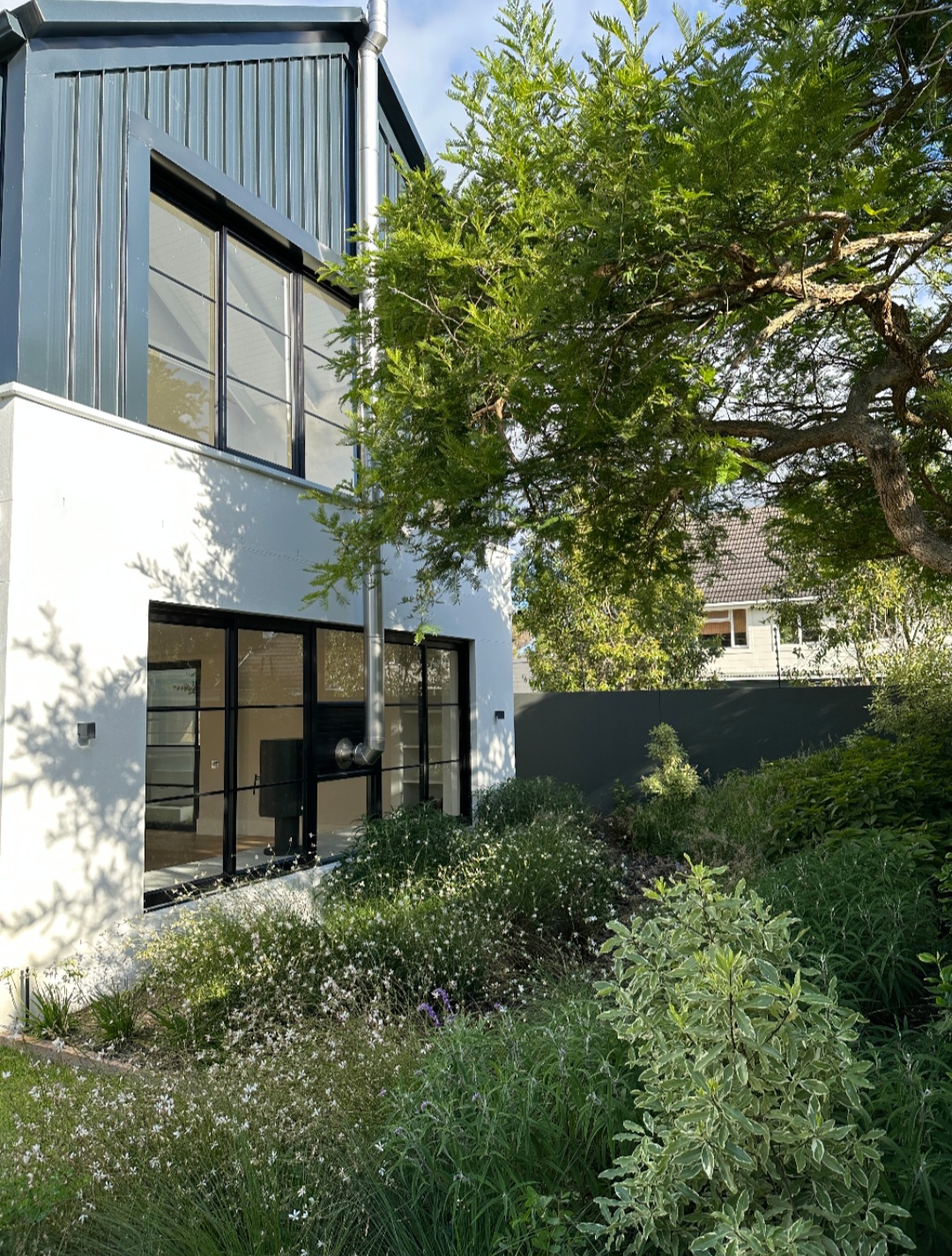
Contemporary steel frames paired with traditional roof cladding creates visual tension that works. This deliberate contrast gives buildings presence. Look for opportunities to mix modern materials with heritage finishes in your own space.
This might mean pairing industrial metal shelving with reclaimed wood, or combining sleek modern furniture with vintage textiles. The key is intentional contrast rather than accidental mismatch.
Let architecture breathe
Resist the urge to fill every corner. Film sets use space deliberately, allowing architectural features room to make their statement. A floating white cement shelf topped with a wood burner becomes a focal point when given space to breathe.
Edit your belongings ruthlessly. Each piece should earn its place by contributing to the overall atmosphere you’re creating. Form should meet function with quiet confidence rather than shouting for attention.
Consider your setting as part of the design
Location influences design decisions. Sillery Oaks sits in Constantia, where rolling vineyards and centuries-old oaks create an atmosphere more reminiscent of the English countryside than coastal Africa. The property’s contemporary farmhouse aesthetic responds to that context.
Think about your own setting. Does your home sit in an urban environment that calls for industrial elements? Or in a leafy suburb where bringing the garden inside makes sense? Let location inform your design choices rather than fighting against them.
Create seamless indoor-outdoor flow
Film sets excel at creating environments that feel expansive. In residential design, this often means blurring the line between inside and outside. Wide openings, consistent flooring materials that extend from interior to exterior, and strategic placement of outdoor furniture all contribute to this effect.
Even small changes help. Remove obstacles that block doorways to gardens or patios. Choose furniture that could work in either indoor or outdoor settings. Use materials that transition smoothly from one space to another.
Julia’s film locations approach to residential design focuses on creating spaces with narrative and drama. “Having seen the extraordinary, larger-than-life sets that grace the silver screen, I’m uniquely positioned to translate that Hollywood magic into real, liveable spaces,” she explains. It’s about making bold choices, using contrast intentionally, and thinking of every element as contributing to an overall story. Your home isn’t just a collection of rooms, it’s a set where your life plays out.
For more visit www.amazingspaces.co.za