

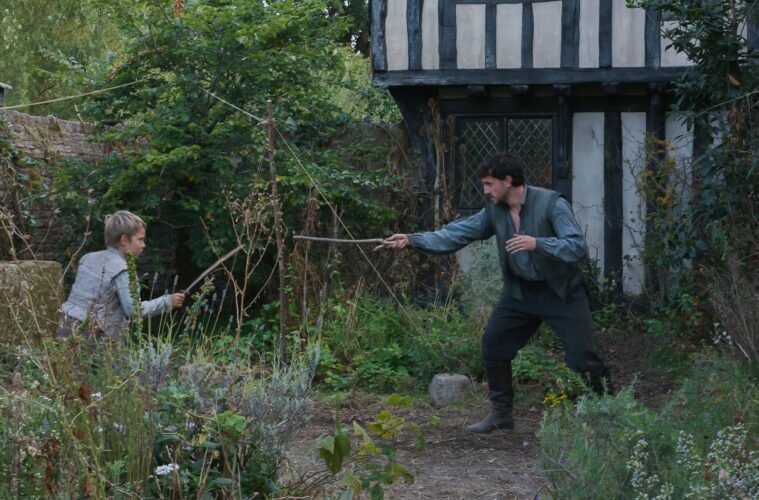
With such nuanced, sensitive and insightful films as 2017’s The Rider and 2020’s Oscar®-winning drama Nomadland, writer-director Chloé Zhao has earned a reputation as one of the most singularly gifted filmmakers of her generation. Now, as writer-producer-director-editor, she brings her visionary approach to HAMNET. The film centers on the marriage between Agnes and William Shakespeare and explores the tumultuous events involving the couple’s son Hamnet, which would ultimately inspire the creation of the Bard’s timeless masterpiece, Hamlet.
The film springs from the pages of Maggie O’Farrell’s acclaimed eighth novel, Hamnet, which won the National Book Critics Circle Award, the Women’s Prize for Fiction and was cited as one of 2020’s five best works of fiction by the New York Times Book Review. For O’Farrell, the story was one she’d hoped to tell for nearly three decades, after having discovered little-discussed details of Shakespeare’s family life, specifically the death of his only son Hamnet, who succumbed to the plague at just 11 years old.
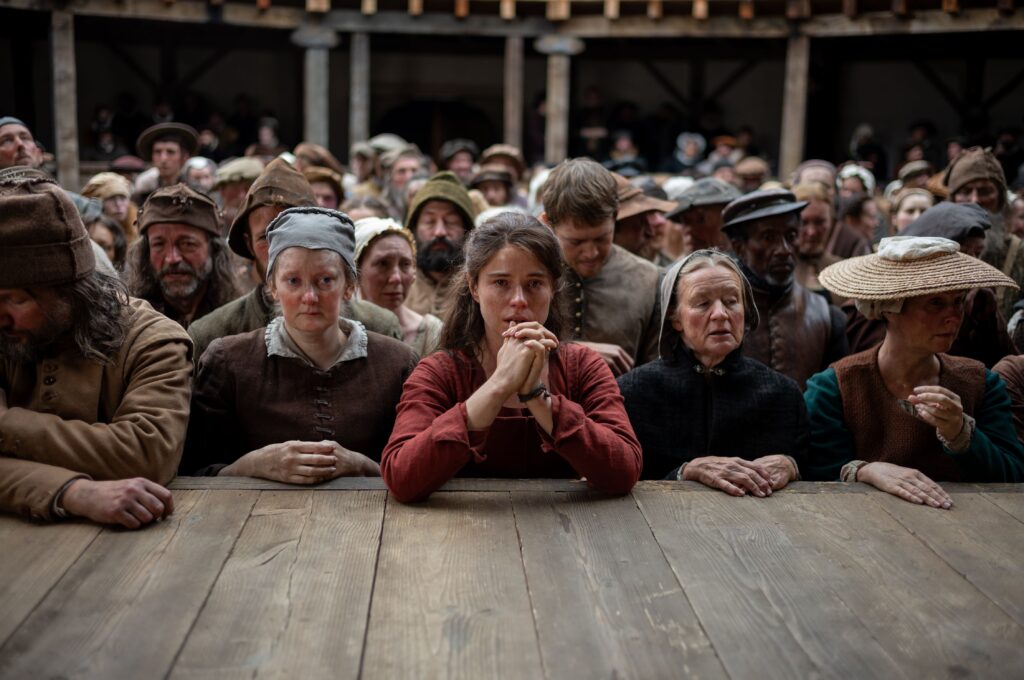
“I always felt it was very unjust to this boy that nobody ever made the connection between this child called Hamnet and the play that was written four or five years later called Hamlet,” O’Farrell says. “This child had become so sidelined, a footnote in his very famous father’s story. So, the whole impetus to me writing the book was to put him on stage and to say that this child was important. He was loved. Without him, we wouldn’t have Hamlet. We owe this child so much, yet he was not part of the conversation at all.”
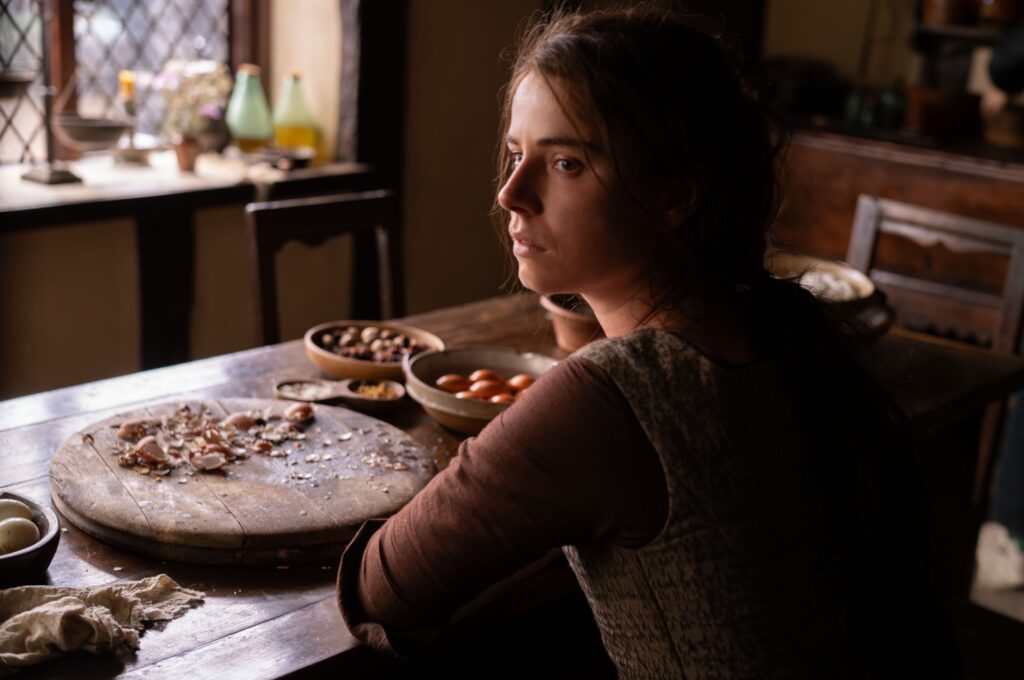
Although he receives title billing in O’Farrell’s novel, the child is not the central protagonist in her story. That role instead falls to Agnes(O’Farrell calls her character by the name she was given at birth, pronounced Ann-yis, rather than the more familiar Anne). The experienced falconer, forager and healer is as untamed as the lush and verdant landscape that surrounds her home. Her strong connection to the natural world borders on the mystical, and her wild, unconventional demeanor is instantly attractive to Will, who also harbors rebellious feelings toward his domineering father and the strictures of late 16th century society.
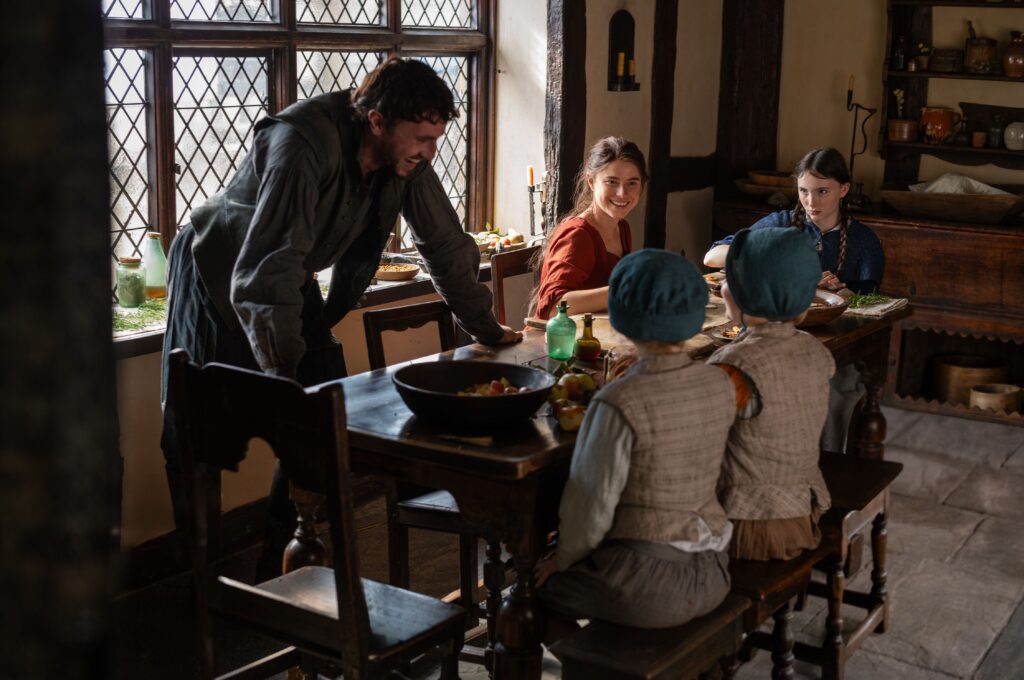
Together, they make a formidable duo whose passions are in sync for much of the early years of their marriage. But their bond begins to fray as Will, encouraged by Agnes, pursues his dreams of creative expression. His sojourns from their Stratford-Upon-Avon home to London to work in theater are his lifeblood, something his wife understands all too well, but his absence is felt keenly by his family, particularly little Hamnet. Agnes uses her skills to make a lovely home for the boy and his two sisters, Susanna and Judith, though some forces prove too strong for even the most fiercely protective mother to keep at bay.
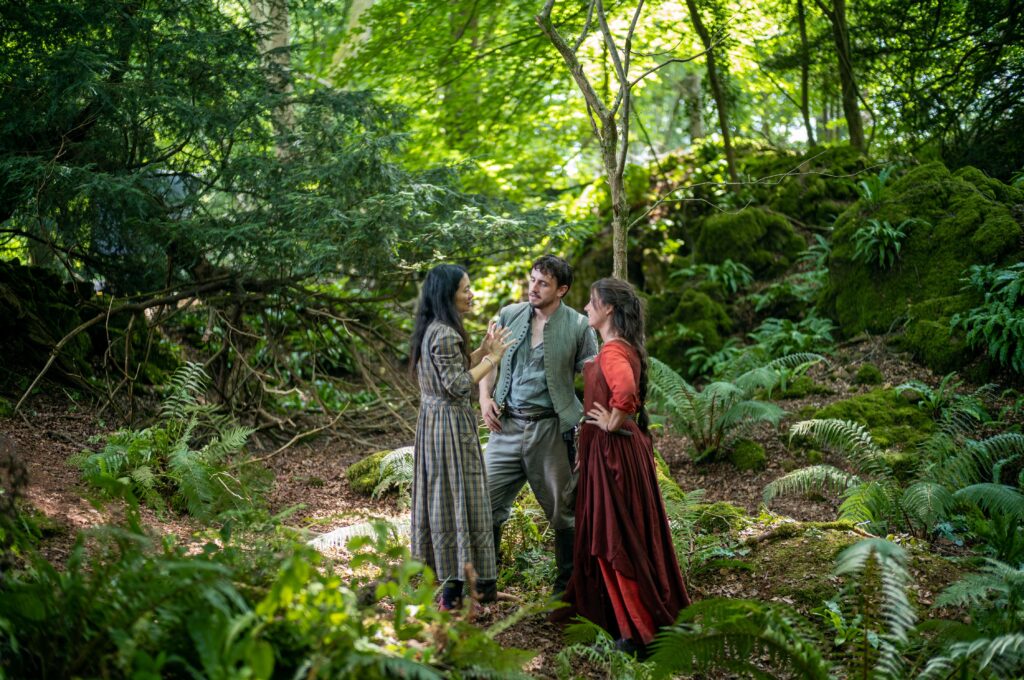
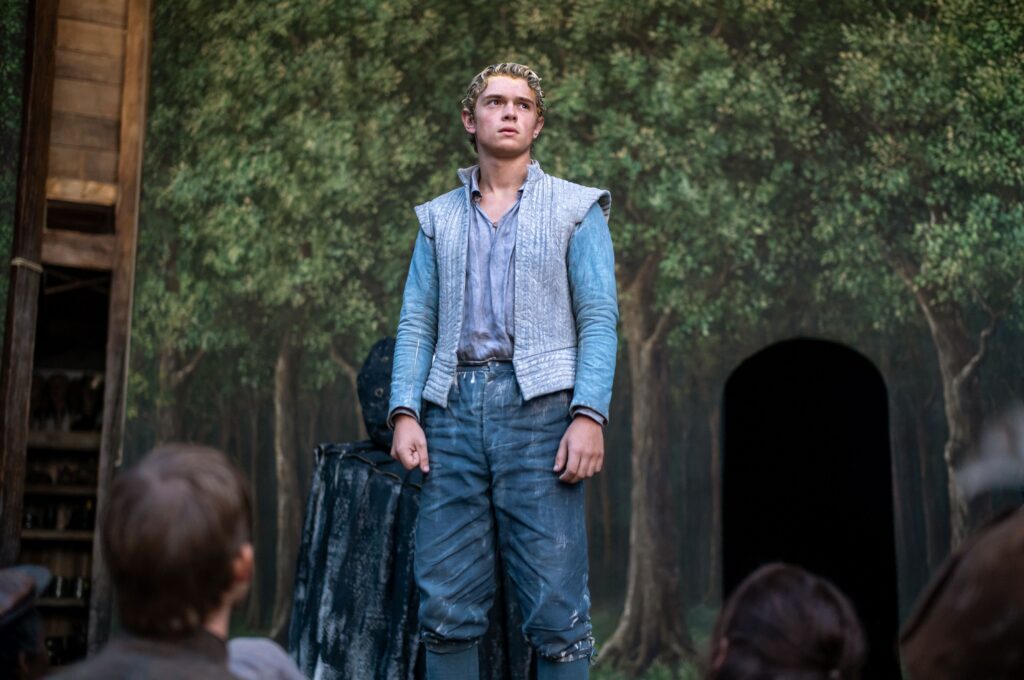
After Hamnet’s sudden illness and demise, the family is sent reeling from the loss, yet Agnes must remain steadfast in her commitment to her daughters and her husband. Still, the couple struggles to move beyond tragedy and find a path toward forgiveness, acceptance and fulfillment. Agnes immerses herself in nature, while Will pours his grief into a play that would live on throughout the centuries, Hamlet (which, in the 16th century, was a common variant of his son’s name)—about a teenage prince who outlives his murdered father. Each finds a kind of catharsis in the act of creativity and imagination, giving meaning to the suffering they’ve experienced.
HAMNET’s journey to the screen began when Hera Pictures founder and producer Liza Marshall received an early copy in November 2019, several months prior to the book’s publication in March of 2020. “Because I’d read all Maggie O’Farrell’s previous novels and I’m such a super fan, I sat down and read the whole book in one night and completely fell in love with it,” Marshall recalls. “It was such an extraordinary, moving piece of writing.”
Securing the rights to adapt the novel, Marshall eventually came to partner with both Neal Street Productions’ Pippa Harris (1917) and Book of Shadows’ Nicolas Gonda (Knight of Cups) on the project. Harris, too, had read O’Farrell’s novel and found it to be meticulously researched and incredibly moving. Harris’ producing partner, Oscar®-winning filmmaker Sam Mendes, signed on to produce. Joining them was Steven Spielberg’s shingle Amblin Entertainment, with whom Neal Street had made the lauded World War I drama 1917. The film industry legend chose to sign on as a producer on the film as well.
For the producers, recruiting the right filmmaker to take the reins of the project was critical; they were seeking someone who would respond to the elliptical nature of O’Farrell’s writing and the unconventional nature of her heroine. All agreed that Chinese-born, British-educated writer-director Chloé Zhao, given her impeccable artistic résumé, was an ideal candidate. “Liza, Pippa, Steven and I all felt that Chloé was the perfect director for this material. Not only does she have an entirely unique approach to film making, she is also one of the most empathetic souls I’ve ever met. Her close collaboration with Jessie, Paul and the rest of the cast allowed them to flourish as actors in extraordinary ways, and to make a movie that combines rawness and delicacy in ways I’ve never seen,” notes Mendes.
“The beautiful and memorable storytelling in Maggie O’Farrell’s best-selling novel deserved to be brought to the screen by a filmmaker who would protect the material’s integrity and demonstrate an intuitive understanding of the emotional and complex journey that the characters—and the audience—take over the course of the story. There was only one director I knew who would bring Hamnet to the screen with such compassionate care, and that is Chloé Zhao,” says Spielberg. “In adapting the novel with Maggie, Chloé’s inherent humanity, unerring sense of narrative, and gift for getting remarkable performances infuse every frame of Hamnet”.
The first female of color and first Asian woman to win the best director prize at the Academy Awards® for Nomadland, which also nabbed the best picture Oscar®, Zhaohad earned acclaim as someone whose films, which often featured non-professional actors, were visually arresting tales interrogating the condition of people on society’s margins with great sensitivity and insight.
“Chloé has a rare gift for distilling stories to their purest essence, uncovering the soul within the structure,” says producer Gonda. “She doesn’t just look at the surface of a story — she wants to understand what pulses underneath it. With a figure as iconic and unknowable as Shakespeare, it takes someone with Chloé’s particular sensitivity and curiosity to uncover not just the facts, but the emotional truths hiding between them.”
O’Farrell was excited by the choice. “Chloé, with a lot of her work, she’s in a very interesting dialogue with art and authenticity and the relationship between the two and how they pull together and pull apart,” she says. “The film is about why we need art, why we make it, where it comes from, where it’s pulled from in your soul.”
Once Zhao was presented with the novel, she immediately connected to it on a spiritual level. “I felt her book was very immersive,” Zhao says. “It was a very visceral experience. It was a very poetic experience. It read almost like poetry to me, which is the type of cinematic language I love. As a filmmaker, when I was reading it, I was seeing images added together in a rhythm. I felt that there is a heartbeat in this book that matches the rhythm of the heartbeat of me as a filmmaker, and I also loved the story. I’m always looking for stories that are both very, very specific and universal at the same time, and this book really is that.”
“I was also very excited because the story touches on death and impermanence and grief and how the act of creativity and imagination could give meaning to the inevitable suffering that we go through in life,” Zhao continues. “When you have source material like that, it’s gold.”
Not only did she want to direct, but she also wanted to write the HAMNET screenplay together with O’Farrell. She sought to shed the typically stuffy trappings of a costume drama to instead create a film about love, loss and the healing power of great art as something visceral, raw and relatable.“Maggie has immersed herself so much [in this world] that she is the embodiment of all these characters, so collaborating with her was vital for me to be able to be inspired by the authentic world and these characters I have,” Zhao says. “There was just no question for me, I had to do that. And also, she’s an incredible writer. We were true partners.”
Zhao’s intention to faithfully translate the spirit of O’Farrell’s acclaimed work of historical fiction to the screen was present from the duo’s earliest conversations—the film was always intended to be one that devotees of the novel could very much embrace. Although the author was thrilled that HAMNET might hew so closely to her novel, O’Farrell concedes she personally felt some trepidation about reconstructing the story for film yet was delighted to discover her inner screenwriter.
“I know how to put down a narrative for the page and know how to put together the plot of a novel—that’s my job and that’s my heart,” she says. “But I had never written for the screen, and I wasn’t sure if I could do it. The mechanics of the narrative is different, the language is different, and the visual language is, of course, different. Something that appears on the page as an interior thought, you need as a scriptwriter to express that either through the visual language or the actual dialogue. That was a really interesting exercise.”
Despite working in different time zones, Zhao’s clear vision for the chronology of the narrative and for its characters helped propel the writing process. The director would often leave What’s App messages for her screenwriting partner that would help inspire revisions and rewrites; as they sent pages back and forth to one another, HAMNET eventually began to take on its final contours.
“You want the audience to see themselves in these characters,” Zhao says. “I want to try to open the hearts of the audience, soften them so they can feel the emotions these characters are feeling. Once they catch the wave with us, with our characters, then they have a chance to also experience catharsis. That’s always the creative goal of my films. Once they go through that catharsis, then they, like these characters, find some meaning from these difficult life situations, and hopefully become more whole through the experience of viewing the film.”