

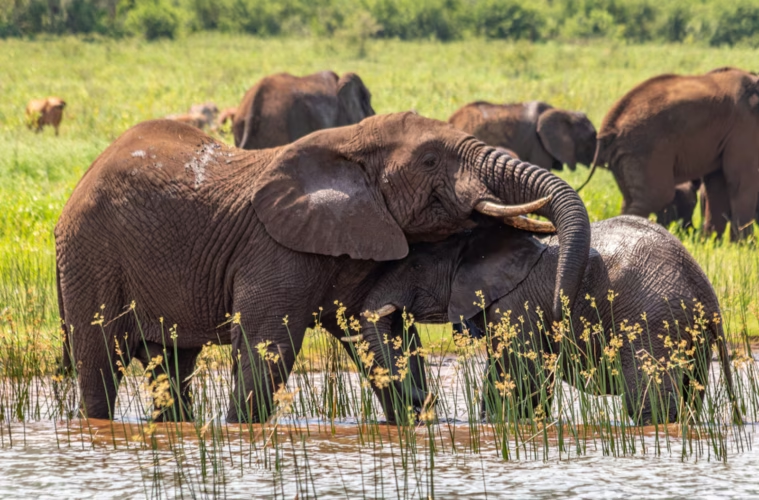
Françoise Malby-Anthony’s latest work is not simply a cookbook or memoir, it’s an invitation into a life lived wildly, generously and deeply connected to nature.
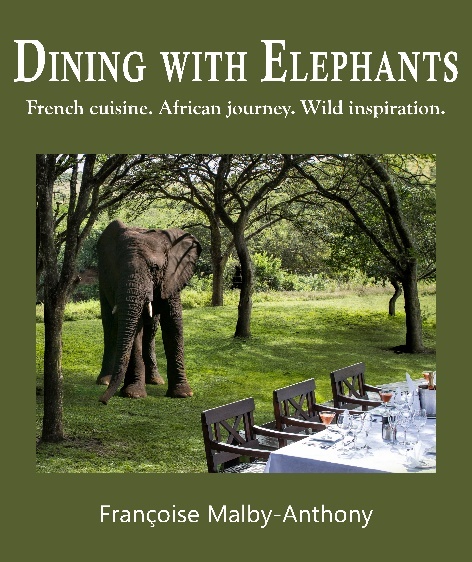
Dining with Elephants isn’t simply a book you read… it’s one you experience.
From the very first pages, I realised this was never going to be a conventional culinary title. Yes, there are recipes – beautiful ones layered with warmth, memory and resourcefulness – but to reduce this book to food alone would miss the point entirely. Because this book breathes.
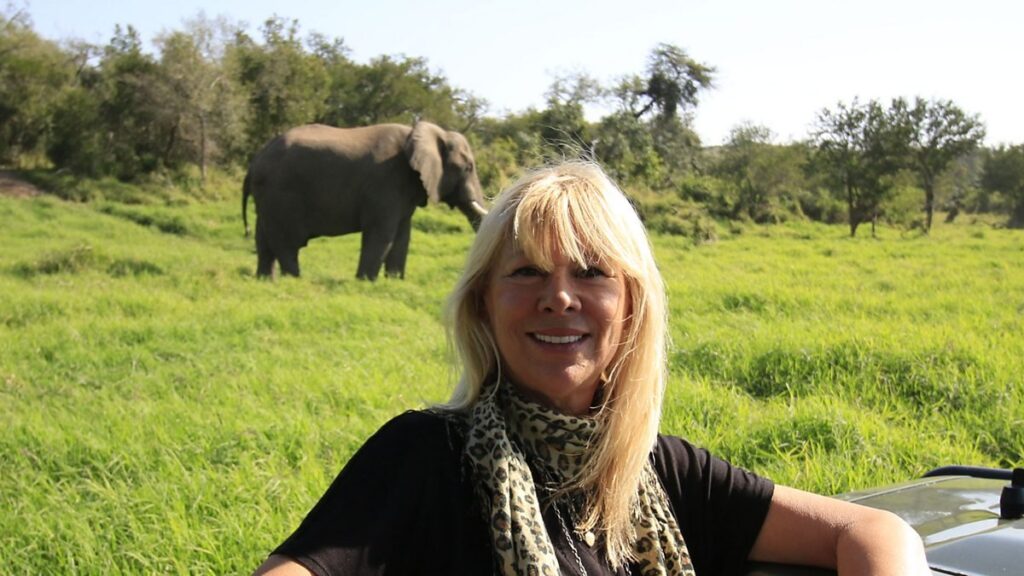
Written by Françoise Malby-Anthony, the woman carrying forward the legacy of Thula Thula Private Game Reserve, the narrative unfolds like a long lunch in the bush. Stories flow as generously as the wine and nature itself feels like an ever-present guest at the table.
What struck me most was the quiet honesty of the prose. Françoise’s storytelling moves effortlessly between humour, tenderness and awe. One moment you’re smiling at the delightful chaos of an orphaned hippo or a mischievous baboon wandering unapologetically through domestic spaces; the next, you’re reflecting on the profound humility required to coexist with the intelligence of the elephants she shares her world with.
In her hands, the bush is never simply a backdrop. It is alive. Watching. Teaching.
Somewhere between the accounts of conservation battles and shared meals, you begin to realise that the food itself is symbolic of a larger “culinary conservation.” Whether it’s a simple Potage Saint-Germain or a rustic bush braai, nourishment here is for connection, community and care.
As someone whose world revolves around storytelling through hospitality, I found myself deeply moved by the philosophy woven throughout these pages. It’s the idea that food can become a language of generosity – that a table can create understanding between species and that the act of cooking is often about far more than what ends up on the plate.
The recipes themselves feel refined without ever becoming intimidating. There is an unmistakable French influence throughout which is a nod to Françoise’s roots yet the dishes remain grounded in the practicalities of bush life and local collaboration. You can almost feel the rhythm of the Thula Thula kitchen; it’s a space where a classic French sauce might be perfected just a few yards away from a watering hole.
And perhaps that’s what makes Dining with Elephants so compelling. It doesn’t romanticise the wild in an untouchable way. Instead, it embraces the unpredictability, the grit and the humour of life on a reserve. The result is a book that feels authentic in a way many modern, over-styled cookbooks don’t.
Reading it reminded me that the most meaningful hospitality experiences are rarely about perfection. They are about presence. Shared stories. Unexpected encounters. It’s the spirit of Ubuntu viewed through a Parisian lens – an understanding that food tastes different when it carries the weight of memory and the soul of the land.
By the final chapter, I found myself less interested in recreating a specific dish and more inspired by the life surrounding it. A life shaped by resilience and an enduring respect for the wild.
In a world where so many titles chase aesthetics over authenticity, Dining with Elephants offers something far rarer: soul. It’s the kind of book you leave within arm’s reach – not just because it is beautiful, but because you know you’ll return to it for comfort, for inspiration and for the reminder that the best meals are often the ones shared closest to the wild.